

Informed readers will have seen that defense Secretary Pete Hegseth planned to have Nidal Malik Hasan executed by firing squad. And to livestream the execution.
Personally, I found this appalling. It’s a right-wing version of the post-Christian barbarism that epitomizes the Culture of Death. As Pope John Paul II taught in his encyclical Evangelium Vitae:
[Our] reality is characterized by the emergence of a culture which denies solidarity and in many cases takes the form of a veritable "culture of death". This culture is actively fostered by powerful cultural, economic and political currents which encourage an idea of society excessively concerned with efficiency.
Numerous Catholic leaders spoke out against Hegseth’s plan.
The U.S. Conference of Catholic Bishops (USCCB) condemned Secretary of Defense Pete Hegseth’s announcement that the military execution of the Fort Hood mass shooter, Nidal Hasan, will be livestreamed for the public to view.
“It is with shock and great sorrow that I have learned of the Department of War’s decision to publicly livestream the execution of Nidal Hasan,” Archbishop Paul Coakley, president of the USCCB, said in a statement on Oct. 9.
“Our God is the God of life,” he said. “In no way can Hasan’s actions be condoned but this decision is a barbaric promotion of a culture of death and must be reconsidered.”
Importantly, given that the firing squad will be comprised of US Army soldiers, Archbishop Timothy Broglio of the Archdiocese for the Military Services issued a strong statement against Hegseth’s plan:
As I would in the case of a procured abortion, I oblige any Catholics assigned to the firing squad to request to be excused from this action contrary to the teaching of the Church.
I encourage you to go read the whole thing. It’s just one page, but it packs in some serious moral teaching and also some very cogent policy arguments.
Even Pope Leo weighed in, albeit obliquely:

As many of you will know, I am not a fan of President Trump. But I commend him for vetoing Hegseth’s plan to livestream the execution.
I am not particularly interested in the specifics of the Hasan case. Instead, thinking about this episode got me thinking about an issue I pondered occasionally on my old blog; namely, to what extent are Catholic doctrines malleable.
A Brief History of Catholic Teaching on the Death Penalty
Scripture
At least insofar as the Old Testament is concerned, Scripture provides no support for the proposition that the death penalty is inadmissible. In Exodus 21:12, for example, God instructs Moses to teach the Israelites that “Whoever strikes someone a mortal blow must be put to death.”
In the New Testament, however, the picture is more complicated. In Acts 25, St. Paul is brought before Festus to answer charges from the chief priests. In verse 11, Paul states: “If I have committed a crime or done anything deserving death, I do not seek to escape the death penalty ….” He does not condemn the prospect of the death penalty being imposed. And, In Romans 13:4, Paul taught that “if you do evil, be afraid, for [the ruler] does not bear the sword without purpose; it is the servant of God to inflict wrath on the evildoer.”
On the other hand, however, Romans 12:19 emphasizes leaving vengeance to God. And, when the Pharisees sought to entrap Jesus by asking what should be done with the women caught in adultery, he responded “Let the one among you who is without sin be the first to throw a stone at her.”
St. Augustine
As Edward Feser relates, Saint Augustine’s position on the death penalty was nuanced. On the one hand, as Feser demonstrates, Augustine’s writings do not indicate that the death penalty is “simply wrong.” But, on the other hand, Augustine “tended to oppose its use in practice, and often pleaded for clemency in particular cases.”
Yet, as Feser points out, Augustine’s concerns were historically contingent:
Augustine worried, first, that an innocent person might be killed, and second, that a guilty person might not have a chance to repent of his sins before death. … Torture and barbaric methods of execution were the main sources of the problem. It is because a person might give a false confession under torture that the innocent might be executed, and it is because of the terror and physical pain of extreme methods of execution that the guilty would be unable to focus on getting themselves right with God.
Augustine thus might have been less troubled by the modern death penalty. Although certainly botched executions such as that suffered by Christa Pike likely would have given him pause.
St. Thomas Aquinas
According to Aquinas:
Now every part is directed to the whole, as imperfect to perfect, wherefore every part is naturally for the sake of the whole. For this reason we observe that if the health of the whole body demands the excision of a member, through its being decayed or infectious to the other members, it will be both praiseworthy and advantageous to have it cut away. … Therefore if a man be dangerous and infectious to the community, on account of some sin, it is praiseworthy and advantageous that he be killed in order to safeguard the common good . . . . (Link)
… it is lawful to kill an evildoer in so far as it is directed to the welfare of the whole community, so that it belongs to him alone who has charge of the community's welfare. Thus it belongs to a physician to cut off a decayed limb, when he has been entrusted with the care of the health of the whole body. Now the care of the common good is entrusted to persons of rank having public authority: wherefore they alone, and not private individuals, can lawfully put evildoers to death. (Link)
Yet, Aquinas also taught that killing sinners may harm the good and that sinners should be spared to allow their repentance, both of which may counsel for reticence in applying the death penalty.
Pope St. John Paul II
Skipping ahead a few (okay, a lot of) centuries, the 1992 Catechism, which was approved under John Paul II, provided:
Assuming that the guilty party’s identity and responsibility have been fully determined, the traditional teaching of the Church does not exclude recourse to the death penalty, if this is the only possible way of effectively defending human lives against the unjust aggressor.
If modern penal conditions allow one to ensure that the Hasans of the world can be prevented from killing again, logically then the death penalty would not be licit.
In Evangelium Vitae JPII developed that line of argument more thoroughly. He posited “a growing tendency, both in the Church and in civil society, to demand that [the death penalty] be applied in a very limited way or even that it be abolished completely.” And he explained:
The problem must be viewed in the context of a system of penal justice ever more in line with human dignity and thus, in the end, with God’s plan for man and society. The primary purpose of the punishment which society inflicts is “to redress the disorder caused by the offence”. Public authority must redress the violation of personal and social rights by imposing on the offender an adequate punishment for the crime, as a condition for the offender to regain the exercise of his or her freedom. In this way authority also fulfils the purpose of defending public order and ensuring people’s safety, while at the same time offering the offender an incentive and help to change his or her behaviour and be rehabilitated.
It is clear that, for these purposes to be achieved, the nature and extent of the punishment must be carefully evaluated and decided upon, and ought not go to the extreme of executing the offender except in cases of absolute necessity: in other words, when it would not be possible otherwise to defend society. Today however, as a result of steady improvements in the organization of the penal system, such cases are very rare, if not practically non-existent.
In an April 2001 First Things article Catholicism & Capital Punishment, Avery Cardinal Dulles’ laid out a careful and nuanced analysis of JP II’s position and situated it in the Magisterium as a whole. Dulles concluded that, while JPII increasingly limited when executions are permissible, this represented a prudential judgment about modern penal capabilities rather than an absolute doctrinal reversal.
In particular, Dulles cautioned that completely overturning the traditional legitimacy of the death penalty would raise severe questions regarding the historical consistency and credibility of the Magisterium. Indeed, and that is the point to which we shall return.
Pope Francis
And so we come to 2018. Crux reported that:
The Vatican announced on Thursday Pope Francis approved changes to the compendium of Catholic teaching published under Pope John Paul II.
“The death penalty is inadmissible because it is an attack on the inviolability and dignity of the person,” is what the Catechism of the Catholic Church now says on the death penalty, adding that the Church “works with determination for its abolition worldwide.”
This is a departure from what the document, approved under Pope John Paul II in 1992, [said] on the matter ….
Crux further reported that:
According to [Prefect of the Congregation for the Doctrine of the Faith, Spanish Cardinal Luis] Ladaria, the new formulation of the Catechism expresses “an authentic development of doctrine that is not in contradiction with the prior teachings of the Magisterium.”
He then explains that previous Church teaching with regards to the death penalty can be explained in a social context in which the penal sanctions were understood differently, and “had developed in an environment in which it was more difficult to guarantee that the criminal could not repeat his crime.”
Ladaria’s statement is obviously in tension with itself—one might even say embarrassingly so—how can a change in doctrine to reflect changed social contexts not be in contradiction with the old doctrine?
Coming Next
Any fair reading of the history we just recounted is that the Church’s teaching on the death penalty has evolved. Some might even say changed. But let’s stick with evolved, at least for the moment.
But if the Church’s teaching on the death penalty can evolve, what about other Church teachings?
I have in mind here a Church teaching of far more day-to-day import for American Catholics than the death penalty; namely, the proscription of contraception.
A 2024 Pew poll reported “that 83% of U.S. Catholics say the church should allow the use of birth control.” Estimates of the percentage of sexually active Catholics who use contraception vary widely, with findings by pro-contraception groups reporting much higher percentages than findings by opponents. But it seems likely that the vast majority of sexually active Catholics use contraception at least some of the time.
All of which led Judge Richard Posner back in 2010 to instruct those of us who are Catholics on our faith or, at least, the proper institutional strategy the Church should follow on contraception. Like much of Posner’s work, it was interesting, provocative, sloppy, and loose with the facts.
Money quote:
In 1930, responding to the Anglican Church’s rescission of its prohibition of contraception, Pope Pius VI made an “infallible” declaration unequivocally reiterating the Catholic Church’s age-old prohibition of the practice, and his declaration was repeated by subsequent popes well into the 1990s. Were the Church now to repudiate that doctrine, it would undermine papal authority. Infallible papal pronouncements would be seen as tentative, revisable, like Supreme Court decisions, which have the force of precedents but can be and occasionally are overruled.
There are some non-trivial factual errors in that statement:
Pius VI lived from 1717 to 1799, which would have made it difficult for him to have made a statement—infallible or otherwise—in 1930. I assume what Posner has in mind is Pope Pius XI’s 1930 encyclical On Christian Marriage.
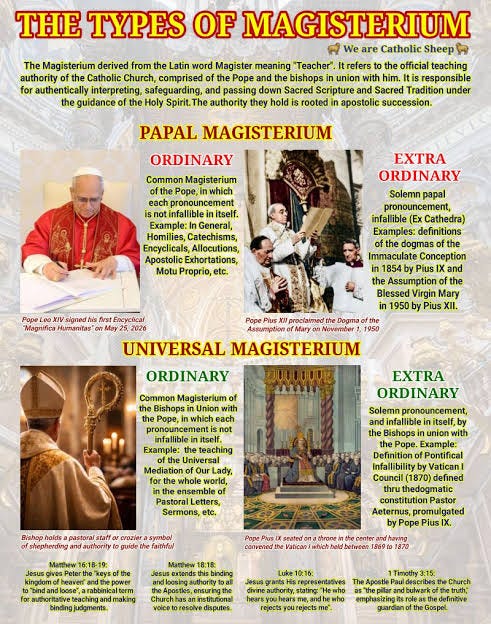
Pius XI’s encyclical was not an infallible “declaration” because there is no such thing. Canon 749 § 1 states that:
By virtue of his office, the Supreme Pontiff possesses infallibility in teaching when as the supreme pastor and teacher of all the Christian faithful, who strengthens his brothers and sisters in the faith, he proclaims by definitive act that a doctrine of faith or morals is to be held.
One source of infallible teaching in the Catholic Church thus consists of Papal definitions. As Vatican II document Lumen Gentium put it, “his definitions, of themselves, and not from the consent of the Church, are justly held irreformable, for they are pronounced with the assistance of the Holy Spirit, an assistance promised to him in blessed Peter.” But nothing in Pius XI’s encyclical rises to that level. Indeed, by most accounts, there are only two such definitions: The Doctrine of the Immaculate Conception of Mary and The Doctrine of the Assumption of Mary.1
Although Pius XI’s 1930 encyclical is generally regarded as anti-contraception, it was Paul VI’s 1968 encyclical Humanae Vitae that is properly regarded as the clearest statement of the Magisterium with respect to contraception. Note that nothing in Humanae Vitae purports to be an infallible definition of doctrine. Because it has been widely accepted by the bishops and subsequent Popes, however, I have no doubt that it qualifies for infallibility as part of the ordinary universal Magisterium.
So the question remains: Could the Church’s doctrine on contraception evolve?
The other form of infallible teaching of the Church consists of the ordinary universal Magisterium. As Lumen Gentium also explained, “Although the individual bishops do not enjoy the prerogative of infallibility, they can nevertheless proclaim Christ’s doctrine infallibly. This is so, even when they are dispersed around the world, provided that while maintaining the bond of unity among themselves and with Peter’s successor, and while teaching authentically on a matter of faith or morals, they concur in a single viewpoint as the one which must be held conclusively. This authority is even more clearly verified when, gathered together in an ecumenical council, they are teachers and judges of faith and morals for the universal Church. Their definitions must then be adhered to with the submission of faith.”