

As part of my committee duties this year I had to research best practices for onboarding new law school teachers. I say teachers rather than professors because I think new faculty are typically much better prepared for the scholarship side of the job than the teaching side. I know that was true in my case.
I found the literature on successful onboarding practices quite interesting. Enough so that I thought it would be worth passing along.
Introduction
The common theme from what I have read is that law schools invest enormous effort in recruiting entry-level faculty and then, by and large, leave them to figure out the classroom on their own. We vet a candidate’s scholarship with great care—the job talk, the draft articles, the outside letters—and then assume that someone who can write a law review article can also run a first-year classroom of eighty anxious students. Sometimes that assumption pans out. Sometimes it doesn’t.
Ted Occhialino put it about as bluntly as one can: “No one taught me how to teach.” (Simon et al. at 267.) He modeled himself on his favorite law professor, got lucky, and improved thereafter by trial, error, and student evaluations. His experience is the norm rather than the exception. As Shauna Van Praagh and Eliza Bateman observe, very few professors learn anything formal about education before launching their careers; instead, they emulate the teachers they admired and try to avoid the mistakes of those they did not. (Van Praagh & Bateman at 750.)
The traditional substitute for training is socialization. Daniel Keating recalls that when Washington University’s law faculty was small enough to gather for dinner nearly every month, new colleagues were simply absorbed into the existing social circle and quickly learned the faculty culture. Once enrollment and faculty size doubled in the 1970s, however, orientation stopped happening spontaneously. (Keating at 59). This decline in informal mentoring likely is widespread. Van Praagh and Bateman (at 751) describe a 2019 roundtable at which a senior professor told a graduate student, in effect, that the university had failed its junior colleagues because experienced faculty no longer have the time to mentor them.
Beginning at Hiring
Hess et al. (as 698ff) argue that the traditional job talk is a weak proxy for teaching ability. A good job talk shows only that a candidate can lecture and field questions. They therefore suggest that a short teaching demonstration would tell the faculty far more. If the candidate is already teaching, which is now common due to fellowships and VAPs, a video of an actual class session is even better.
To be sure, I am not proposing that a twenty-minute demonstration displace scholarship as the principal criterion for appointment. But a demonstration class built around a hypothetical tells the committee more about a candidate’s classroom instincts than an hour of questions about her job talk paper. It also sends a signal, from the very first contact, that the school takes teaching seriously.
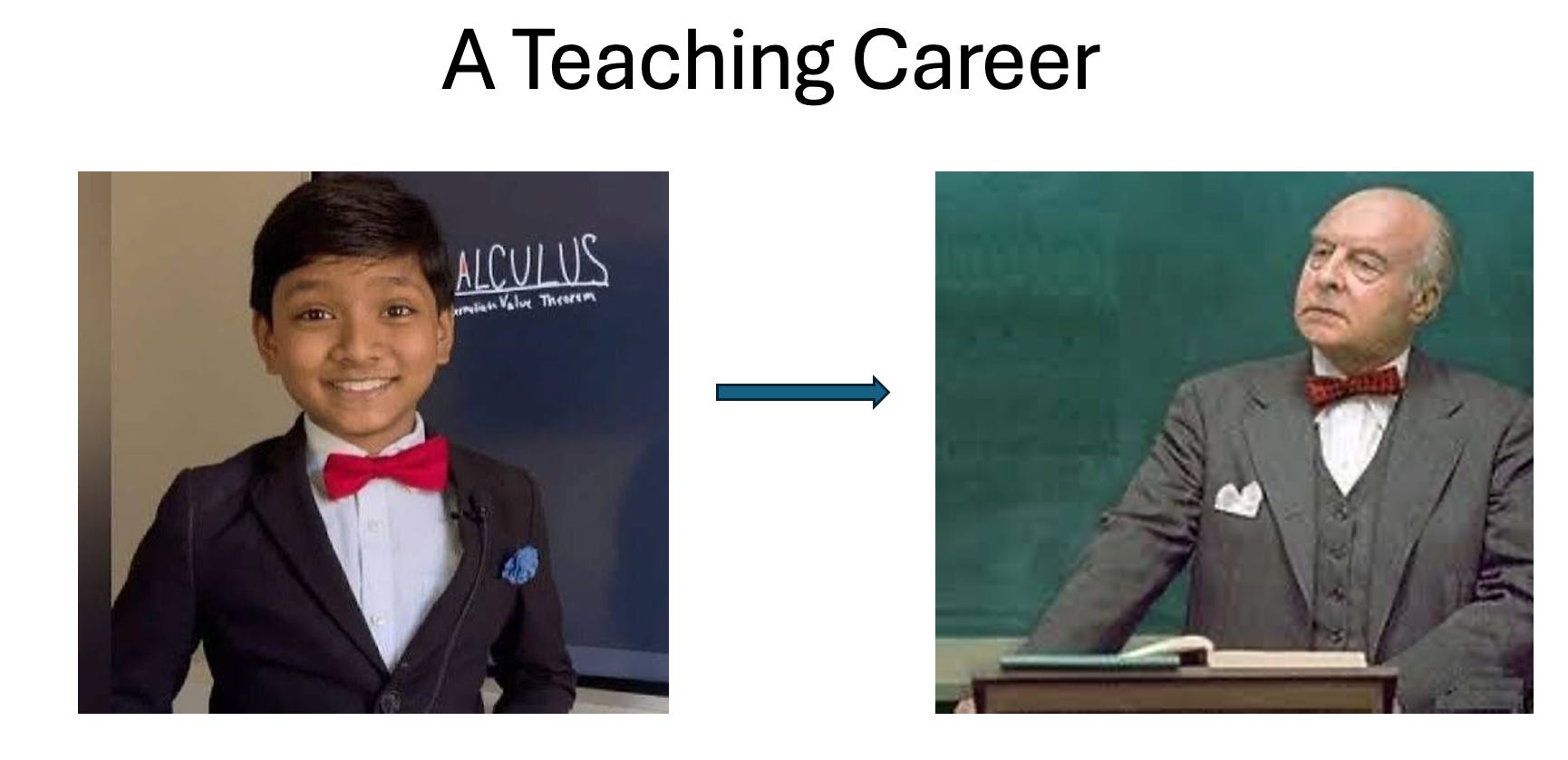
Onboarding the New Hire
Orientation
I thought Keating’s article was the best treatment of onboarding new faculty. I was particularly struck by two of his suggestions.
The first is that established faculty draft a memorandum titled Things I Wish I Had Known as a New Faculty Member, which covers things that do not belong in the official faculty rules but nevertheless trip up newcomers. (Keating at 60.) Keating’s favorite example was a senior colleague who, on his first day of teaching, was surprised to see students trickling into his nine o’clock class. Only afterward did students tell him that “[a]round here classes begin eight minutes after the hour.”
I think such a memorandum should cover, at a minimum, the grading curve and its enforcement, the course evaluation process, exam administration and accommodations, classroom technology and who to call when it fails, attendance norms, and the practical mechanics of the course web page. Keating sensibly recommends attaching existing free-standing documents as appendices, updating the memo every year so that the named contacts still hold the named jobs, and preparing customized versions for visitors and adjuncts, who arguably need it even more than tenure-track hires do.
The second key idea is holding a series of in-person roundtable sessions on matters that do not lend themselves to a memo because faculty views on them diverge. Keating’s school timed them to the academic calendar: a teaching session the week before fall classes, a session on drafting and grading exams later in the fall, and sessions on scholarship and the law reviews in the spring. Designated senior colleagues opened each subtopic with five minutes of remarks, followed by open discussion. Curiously, the new faculty valued these sessions less for the specific information conveyed than for the comfort of learning “that there is no single right way of doing things.”
I suspect that is exactly right. The single most reassuring thing a new professor can hear before her first class is that her senior colleagues do not agree among themselves about how to teach. The sessions also had an unanticipated payoff for the senior faculty, who found themselves in a spirited debate about multiple-choice versus essay exams and learned from one another in the process. Keating therefore concludes that the sessions are worth running even in a year with only a single new hire.
In my view, the in-house orientation program should be supplemented—but not replaced—by external orientation. Among the few schools in the Simon survey that did anything at all with respect to teaching-oriented faculty development, encouraging attendance at AALS workshops was a common element. (Simon et al. at 258.) Law schools should fund attendance at the AALS programming for new law teachers as a matter of course rather than on request.
Individual Mentoring
Informal mentoring—particularly on a large faculty—is hit or miss. In the Washington University system Keating described, mentoring was offered to every tenure-track candidate who wanted it (in practice, nearly all did), the junior colleague had some say in the selection of the mentor, and mentors received a list of suggested discussion topics. (Keating at 63.)
One serious problem, however, was the conflict between the mentor’s role as confidant and her role in the tenure process. Keating’s school addressed it by making clear in writing that mentors do not report to the tenure committee, while permitting the mentor to seek clarification from or pass along information to the committee at the candidate’s request. That strikes me as the right rule.
Keating reports that formal mentoring is most valuable in the first year or two, after which most junior colleagues have identified the senior colleagues they will turn to anyway. That timing suggests concentrating mentor effort, and mentor compensation, on the first two years. Hess and his coauthors recommend course release for faculty who take on substantial mentoring of colleagues. (Hess et al., supra, at 710.) At a minimum, the work should be credited as service.

Evaluating New Teachers
I suspect that at most law schools teaching evaluation focuses on assessing whether the instructor meets the school’s standards for tenure, promotion, and raises. But what if it focused on helping teachers become better teachers?
Peer Teaching Observations
The dean at Franklin Pierce Law Center (FPLC) described their pre-reform norm candidly: one simply did not visit a colleague’s class without an invitation, and invitations were rare. (Simon et al. at 271.)
I’m not convinced that one-on-one mentoring re teaching is all that useful, at least not without very careful study of proposed assignments. The mentoring one would get from a non-Socratic teacher like myself would be very different from someone who aspires to be Kingsfieldian (if there are any left).
But my review of the research did identify some observational techniques that might be useful.
First, new colleagues should watch experienced colleagues teach. McGill’s legal education seminar requires participants to observe classes taught by two different full-time professors and to write a short memo analyzing each professor’s objectives, techniques, and effectiveness. Van (Praagh & Bateman at 764.) Participants reported that the exercise let them see behind the curtain and, once again, taught them that there is no one right way to teach. Columbia’s version of the seminar went further, effectively requiring newly arrived professors to co-teach it alongside a senior colleague. (Id. at 755.) Most schools likely would not need to go that far. But a requirement that each new colleague visit at least two classes during her first semester—one in her own field and one well outside it—followed by a conversation with the observed teacher, would cost almost nothing. Like chicken soup, it can’t hurt and might help.
Second, new colleagues could be observed, under a protocol designed for improvement rather than judgment. FPLC’s program is the model here. Its faculty deliberately chose a purely formative peer-review system, and the dean committed that nothing gathered through the program could be used in tenure or promotion proceedings. (Simon et al. at 260.) Each observation followed the same three steps. In a pre-observation meeting, the teacher described her goals for the class, its place in the course, her methods, and her expectations of students, and identified at least one specific aspect of her teaching on which she wanted feedback. The observers then attended the full class and spoke with students afterward. Finally, the team debriefed as soon as possible, ideally the same day, because delay produced awkward encounters and needless anxiety. (Id. at 262–63.)
I’m less persuaded by this idea than the preceding one for the reason identified above. But having a program facilitator who sits in on all of these sessions with all new hires likely would address that problem to some extent.
In any case, I think there should be three refinements of the FPLC approach. First, confidentiality should not be waivable. When FPLC’s first tenure candidate asked that observation information be shared with the faculty, the committee agreed, only to realize that the next candidate now faced pressure to waive lest silence be read as concealing bad news. (Id. at 260.) Second, observation should be reciprocal. FPLC expected that senior teachers paired with novices would get little out of the exchange, but they in fact reported learning a great deal from watching their junior partners. (Id. at 262.) Hess et al. (at 721) likewise reported that reciprocal observation “creates mutual vulnerability and shared responsibility.” Third, students should be told what is going on. Some FPLC students concluded that their teacher had been singled out for scrutiny, which is the last impression we want a first-year professor’s students to form. (Simon et al. at 262 n.17.)
Feedback from Students
Student evaluations deserve a guided first reading. There is credible evidence that they correlate with learning, but also evidence of bias based on race, gender, and political ideology and of outsized effects from interpersonal mannerisms. (Hess et al. at 698.) A new professor reading her first set alone will predictably fixate on the two cruelest comments. Hess and his coauthors recommend reviewing evaluations with a trusted colleague, who can identify themes, distinguish trends from noise, and, not least, point out what went well. (Id. at 720–21.)
Self-Reflection
Hess et al. (at 727) argue that video of one’s own teaching is uncomfortable and invaluable; it reveals everything from inaudible delivery to the discovery that one lectures far more than one intended. A teaching journal is cheaper still, and law professors surveyed by Hess and Sophie Sparrow rated it the single most effective development activity for producing actual changes in teaching behavior. (Hess et al. at 727.)
Van Praagh and Bateman (at 761) argue that each new colleague should draft a short statement of teaching philosophy by the end of her first year and revise it annually. I their view, this process is a core part of learning to teach. Personally, I’m a bit skeptical. But I suppose it would be useful at the very least as groundwork for the self-assessment in the tenure file.
Teaching Teaching
Workshops etc.
FPLC’s faculty rated a retreat led by a Gonzaga law professor with a doctorate in education highly, but found sessions led by non-law educators hard to translate into anything usable in a law classroom. Accordingly, the school reoriented its in-house training around law teachers, including an annual visiting professor of teaching excellence. (Simon et al. at 264-66.) On the other hand, Hess et al. (at 707-08) urge schools to invite educational theorists and learning scientists to faculty colloquia.
Hess et al. report (at 701) that attending a teaching conference was rated the most effective development activity for building both confidence and enthusiasm, yet only about a quarter of respondents had attended one in the preceding five years. Clearly, this is an area where schools should be doing more.
Who’s the Boss
A collegial body of equals needs a locus of authority to get anything done. FPLC concluded that its program required a designated leader with meaningful released time, at least for its first two years. (Simon et al. at 259–60 & n.10.)
Yet, Hess et al. (at 704-05) found that, of the 118 law schools surveyed, dozens had an associate dean with “research” in the title but none had one with “teaching.” Hess et al., supra, at 704–05. Whether or not we create such a title, responsibility for new-faculty teaching development should sit with a named person who answers for it.
Recommendations
How would I operationalize what learned?
Hiring
Require a short teaching demonstration as part of the appointments process for every finalist.
Require candidates who are fellows or VAPs to submit a video of their teaching.
Orientation
Prepare, and update annually, a Things I Wish I Had Known memo with a teaching-focused section and appendices.
Hold a pre-semester teaching roundtable in August and a fall session on exam drafting and grading, timed to the calendar and run even in years with a single hire.
Observations
Require each new colleague to observe at least two colleagues’ classes in her first semester.
Conduct one formative, confidential observation per semester in years one and two under a pre-meeting, observation, and same-day debrief protocol, with non-waivable confidentiality, reciprocal pairing, notice to students, and an unannounced video in year two.
A guided review of student evaluations with a senior colleague.
Law School Programs
Fund one teaching conference at least in the first two years.
Host periodic teaching workshop lunches. Make attendance mandatory for new faculty.
Designate a named faculty leader with released time to run the program.
References
Stephen Daniels, Martin Katz, and William Sullivan, Analyzing Carnegie’s Reach: The Contingent Nature of Innovation, 63 J. Leg. Educ. 585 (2014).
Gerald F. Hess, Michael Hunter Schwartz & Nancy Levit, Fifty Ways to Promote Teaching and Learning, 67 J. Legal Educ. 696 (2018).
Daniel Keating, A Comprehensive Approach to Orientation and Mentoring for New Faculty, 46 J. Legal Educ. 59 (1996).
Mitchell M. Simon, M. E. Occhialino, and Robert L. Fried, Herding Cats: Improving Law School Teaching, 49 J. Legal Educ. 256 (1999).
Shauna Van Praagh & Eliza Bateman, Becoming a University Educator: Teaching Tomorrow’s Law Teachers, 69 J. Legal Educ. 749 (2020).