

Father Berard L. Marthaler (1927-2014) was a professed member of the Louisville Province (Our Lady of Consolation) of the Order of Friars Minor Conventual (OFM Conv.). He was received a S.T.D. (Doctor of Sacred Theology) from the Pontificia Facoltá di S. Bonaventure in Rome. He then earned a Ph.D. in history from the University of Minnesota. He taught at The Catholic University of America from 1963-1997.
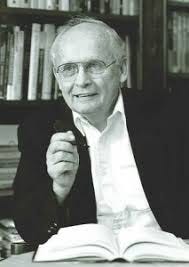
His book, The Creed: The Apostolic Faith in Contemporary Theology (AMAZON LINK), offers a comprehensive study of the Apostles’ and the Nicene Creeds, which are the Christian Church’s foundational statements of belief. His perspective blends history and theology, with dollops of social, cultural, and liturgical commentary. It is doubtless the best thing I’ve ever read on the Creeds.
What is a Creed?
The Catechism of the Catholic Church states that:
From the beginning, the apostolic Church expressed and handed on her faith in brief formulae normative for all. But already very early on, the Church also wanted to gather the essential elements of her faith into organic and articulated summaries, intended especially for candidates for Baptism:
“This synthesis of faith was not made to accord with human opinions, but rather what was of the greatest importance was gathered from all the Scriptures, to present the one teaching of the faith in its entirety. and just as the mustard seed contains a great number of branches in a tiny grain, so too this summary of faith encompassed in a few words the whole knowledge of the true religion contained in the Old and the New Testaments.”
Such syntheses are called “professions of faith” since they summarize the faith that Christians profess. They are called “creeds” on account of what is usually their first word in Latin: credo (”I believe”). They are also called “symbols of faith”. (¶¶ 186-187)
Although the Church has promulgated many creeds over the centuries, the Catechism tells us that “two occupy a special place in the Church's life.” (¶ 193) These are the Apostles’ Creed and the Nicene Creed.
The Creeds
Both Creeds focus on the question Jesus posed to his disciples on the road to Caesarea Philippi: “Who do people say that I am?” In other words, they are exercises in Christology.
What is Christology and Why it Matters

At the outset, I told you this was going to be an eclectic blog. The last three posts are about as eclectic as you can get: a science fiction recipe, a recipe for lasagna, and now some musings on Catholic theology. Welcome to my online world.
Or, perhaps more precisely, they are statements about not just who Jesus is but also who are the Father and the Holy Spirit.
The Apostles’ Creed
The origins of the Apostles’ Creed are lost in the mists of time. Some believe they were written by the Apostles after whom the Creed takes its name. Others believe it was written as late as the 700s. The Catechism implies the former:
The Apostles' Creed is so called because it is rightly considered to be a faithful summary of the apostles' faith. It is the ancient baptismal symbol of the Church of Rome. Its great authority arises from this fact: it is "the Creed of the Roman Church, the See of Peter the first of the apostles, to which he brought the common faith.” (¶ 194)
In any event, the Creed is frequently divided into three sections:
God the Father – Affirming belief in one God, the Almighty Creator.
Jesus Christ – Detailing the life, death, and resurrection of Jesus, affirming his dual nature, suffering under Pilate, ascension, and future return as judge.
The Holy Spirit and the Church – Focusing on the Holy Spirit, the church, the communion of saints, forgiveness, and eternal life.
As Marthaler recounts, however, even this is the subject of long debate. An old tradition asserted that because there were twelve Apostles, their Creed should be divided into twelve statements of belief. St. Thomas Aquinas taught that there were 14 articles. (12) The Catechism divides it into twelve articles of faith. (¶ 191)
In any event, the accepted text of the Apostles’ Creed goes as follows:
I believe in God the Father almighty, Creator of heaven and earth.
And in Jesus Christ, His only Son, our Lord, Who was conceived by the Holy Spirit,
born of the Virgin Mary, suffered under Pontius Pilate, was crucified, died, and was buried. He descended into hell; the third day He rose again from the dead; He ascended into heaven, and sits at the right hand of God the Father almighty, from thence He shall come to judge the living and the dead.I believe in the Holy Spirit, the holy Catholic Church, the communion of saints, the forgiveness of sins, the resurrection of the body and life everlasting. Amen.
The Nicene Creed
In contrast to the Apostles’ Creed, we know exactly when the Nicene Creed came into being. In the early part of the Fourth Century, an Alexandrian-based presbyter named Arius pulled together various strains of early Christology into a coherent doctrine that rejected the Trinitarian view of God’s nature. As Marthaler observes, Arius taught that “Christ was neither truly God nor truly human.” (89) Instead, Arians believed that Jesus was created by God as the first and highest of all God’s creatures. As a creature, Jesus was subordinate to God, although the highest and first born of all God’s creatures.
A serious division arose in the 320s as Alexander, then Bishop of Alexandria, taught a more Trinitarian Christology. After Arius criticized Alexander’s views, the latter excommunicated Arius. But Arius had support from other leaders of the Eastern Church and the debate spread.
In 325, Emperor Constantine called the first ecumenical council to meet in Nicea. At that Council, Arianism was declared heretical and anathematised. According to tradition, the Council also promulgated a profession of faith accepted by 318 prelates, which became the Nicene Creed. (89-91) Accordingly, “it was the term homoouisos that became the slogan of Nicea: the Son is “on in being with the Father.”
The rejection of Arianism was confirmed at the Council of Constantinople in 381. (93) As for the Nicene Creed, the Council of Chalcedon in 451 decreed that “pre-eminence belongs to the exposition of the right and spotless creed of the 318 saintly and blessed fathers who were assembled at Nicaea when Constantine of pious memory was emperor.”
The Roman Catholic version of the Creed reads as follows:'
We believe in one God, the Father, the Almighty, maker of heaven and earth, of all that is, seen and unseen.
We believe in one Lord, Jesus Christ, the only Son of God, eternally begotten of the Father, God from God, Light from Light, true God from true God, begotten, not made, of one Being with the Father. Through him all things were made. For us men and for our salvation, he came down from heaven: by the power of the Holy Spirit he was born of the Virgin Mary, and became man. For our sake he was crucified under Pontius Pilate; he suffered died and was buried. On the third day he rose again in fulfillment of the Scriptures; he ascended into heaven and is seated at the right hand of the Father. He will come again in glory to judge the living and the dead, and his kingdom will have no end.
We believe in the Holy Spirit, the Lord, the giver of life, who proceeds from the Father and the Son. With the Father and the Son he is worshipped and glorified. He has spoken through the Prophets.
We believe in one holy catholic and apostolic Church. We acknowledge one baptism for the forgiveness of sins. We look for the resurrection of the dead, and the life of the world to come.
Amen.
I say the Roman Catholic version, because our Orthodox brothers and sisters object to the italicized language in the fourth paragraph. This is the filioque clause and the source of much controversy.
The original text of the Creed stated that the Holy Spirit proceeded from the Father. In the late sixth century, however, churches in Gaul and Spain began adding the filioque clause to the creed. (250) The issue cropped up again in the Eighth Century when Charlemagne took a personal interest in supporting its use. (251) The controversy perked along for a couple of centuries. (253-255) But it was not until the reign of Pope Benedict VIII in the early Eleventh Century that the Western church officially added the filioque clause to the approved official text of the Creed. (253) The Eastern Orthodox churches rejected the clause, which contributed significantly to the Great Schism of 1054.
Personally, I am unable to get worked up about the filioque controversy, with all due deference to those for whom it is a most serious matter. It is probably a matter of inadequate catechesis. I grew up in an Army family. Although my father was a Chaplain (of the Baptist persuasion), he was mostly in administrative roles during my formative years. I thus attended services with whatever Protestant chaplain happened to be assigned to our base. Once I went to college and then on into adulthood I continued to bounce around between Protestant denominations more or less freely. As a result, my faith long was what C.S. Lewis describes as Mere Christianity (AMAZON LINK): I was in “an entrance hall out of which doors opened into various rooms.” But a “hall is a place to wait in, a place from which to try the various doors, not a place to live in.”
When my faith journey led me to Catholicism, I learned about obsequium religiosum—i.e., religious assent, which means giving a respectful submission to authoritative teachings of the Church. I’m perfectly happy to give religious assent to the filioque clause, but I must admit that I do so mainly by not worrying too much about it.
I felt somewhat better about that when I read Bishop Robert Barron’s wonderful study of the Nicene Creed, Light from Light (AMAZON LINK), in which he wrote:
I am convinced that there is ultimately nothing to it and that it gives dogmatic theology a bad reputation for logic-chopping and hairsplitting. (119)1
The Creed in Worship
We Catholics recite the Creed in every Mass. Although the Church allows parish priests to choose between the Apostles’ and the Nicene Creed any time of year, during most of the year most priests have their parishioners use the Nicene Creed. During the Lenten and Easter seasons, however, many parishes use the Apostles’ Creed. (My parish does.)
Why recite a statement of belief every week? After all, we know what we believe don’t we?
Affirmation
Marthaler describes the creed as a “criterion of orthodoxy.” It became a regular feature of the Mass in Spain at the end of the sixth century, where its function was to help eradicate lingering Arianism among the Visigoths.2 (250)
Today, the Catechism states:
Whoever says “I believe” says “I pledge myself to what we believe.” Communion in faith needs a common language of faith, normative for all and uniting all in the same confession of faith.
I take that to mean that the weekly recitation of the Creed at Mass serves as a regular reminder of what we believe and thereby help ensure that what we believe is orthodox. Reciting it out loud and publicly is a form of giving testimony to what we believe. Reciting it in unison is a way of being in community with our parish and, indeed, every Catholic—every Christian, for that matter—who is reciting the creed anywhere in the world.
Other Reasons
In addition to being a theological statement of orthodox belief, Marthaler identifies other roles the Creeds play in our faith walk. In particular, he emphasizes that they are “doxologies, prayers of praise and thanksgiving for all God has done.” (382)
And so we will go forward in gratitude.
Barron nevertheless goes on “to lay out the matter somewhat economically.” I encourage those who are interested in the debate to check out his book.
The Goths and their fellow Germanic tribes had been brought to Christ mainly by Arian missionaries. Arianism thus persisted among them long after it had been decisively rejected within the Roman Empire. Among the Visigoths of what is now Spain, for example, it persisted until the Third Council of Toledo in 589. (251)