

I recently received a message from a reader who wrote:
Steve, I have a rather unconventional question. I find a great void in life without the meaning that God and salvation give it. And I always want to believe this is the reality, but the very fact that I want to believe it makes me think I am biased when weighing the facts. So you tell me, how do you believe in God? These days, I need this more than ever.
Or, as one of my nieces once asked me, why do I believe in God?
I sort of stumbled through an answer, which I fear was not terribly coherent. But it’s a question I’ve been thinking about a lot lately. I am quite sure that I believe in Jesus Christ as Lord and Savior. I am quite sure that I believe in the tenets of Christianity set out in the Nicene Creed. But why?
Starting With Lewis
People smarter than I and far more deeply versed in theology and philosophy have tried to make rational arguments for the existence of God. Works that I found particularly helpful in my own faith life include C.S. Lewis’ Mere Christianity. Among the various arguments Lewis advances in it, I found his so-called trilemma especially convincing:
A man who was merely a man and said the sort of things Jesus said would not be a great moral teacher. He would either be a lunatic—on the level with the man who says he is a poached egg—or else he would be the Devil of Hell. You must make your choice. Either this man was, and is, the Son of God: or else a madman or something worse. You can shut Him up for a fool, you can spit at Him and kill Him as a demon; or you can fall at His feet and call Him Lord and God. But let us not come with any patronizing nonsense about His being a great human teacher. He has not left that open to us. He did not intend to.
Granted, there are those who assert various logical fallacies in Lewis’ argument, most notably the purportedly false dilemma, but I think those critics have been rebutted quite effectively.
Other Smart Folks
Other works I’ve found helpful include Paul Johnson’s The Quest for God and Jesus: A Biography from a Believer, Timothy Keller’s Making Sense of God, and Bishop Barron’s To Light a Fire on the Earth.
I will not try to recapitulate their various arguments here. But I point out the existence of such arguments first to counter those who claim there is no logical rason to believe in God and second because St. Paul told us that “Faith comes from what is heard, and what is heard comes through the word of Christ.”
Belief is fostered through the authority and witness of others. We all have the ability to sense whether certain people are truthful and credible.
Apply that ability to what you read and hear. Whether we receive God’s message through written texts (such as those above) or spoken words (Bishop Barron’s YouTube videos are a great place to start), we gain access to truths that are rooted in trust—trust in what and whom we have heard and experienced firsthand.
Intuiting God Experientially
At the end of the day, however much merit the various rational arguments for God may have, “faith is the substance of things hoped for, the evidence of things not seen.” Ultimately, I think, we—or, at least I—intuit God experientially.
Put another way, my belief in God rests as much—if not more—on personal experience rather than rational discourse. Of course, skeptics have often vehemently opposed justifying faith solely through religious experiences, a stance that is understandable. Indeed, they raise a legitimate question: Can religious experience, without additional evidence, sufficiently validate faith? One must also acknowledge that relying solely on emotion, feelings, and personal experience can lead us astray into believing falsehoods.
Yet, I concur with theologian Alvin Plantinga, who drew on what John Calvin called the “sense of the divine” to argue that belief in God may be considered a “properly basic” belief. In other words, belief in God is a foundational belief requiring no further justification to be held rationally.
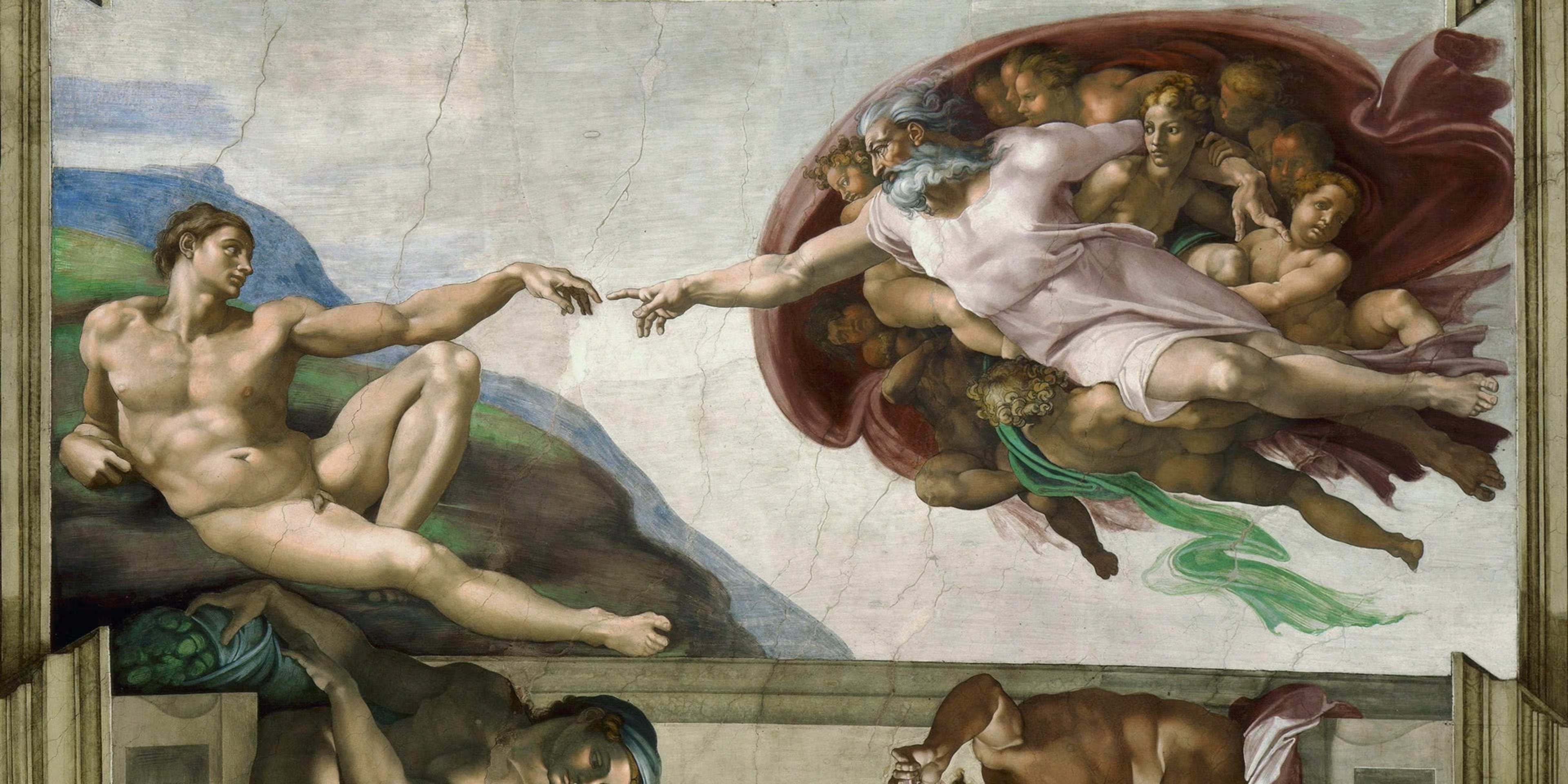
I also concur with St. Paul, who posited that the world around us reveals God’s “eternal power and divine nature, invisible though they are” (Romans 1:20). In other words, St. Paul believed in the ability of the senses to reveal truths. He maintained that through philosophical reflection following sensory experiences, we could grasp God’s existence. Our senses guide us towards the ultimate reality—the singular God who exists in simplicity and infinity.
Begin with Beauty
I think this insight is what Bishop Barron has in mind when he argues that belief in God begins with beauty:
The pattern is more or less as follows: first the beautiful (how wonderful!), then the good (I want to participate!) and finally the true (now I understand!). A young man watches a skillfully played game of baseball, and it awakens in him a profound desire to play as well as those whom he admired; and then the actual playing of the game teaches him, from the inside, the rules and rhythms of baseball. A completely inadequate way of drawing a kid into the world of baseball would be to start with a clarification of the rules or with a set of drills. Rather, show him the beauty of baseball, and he will want to play, and having played, he will know.
Conclusion
I would not claim profundity for anything I just said. To the contrary, I would disclaim it.
It is simply the best answer I have today to the most basic question of life.
I hope it helps.