

In an earlier post, I discussed the Catholic Church’s evolving position on the death penalty.
Nidal Malik Hasan and the Church that Can and Cannot Change

Informed readers will have seen that defense Secretary Pete Hegseth planned to have Nidal Malik Hasan executed by firing squad. And to livestream the execution.
I concluded that post by observing that:
Any fair reading of the history we just recounted is that the Church’s teaching on the death penalty has evolved. Some might even say changed. But let’s stick with evolved, at least for the moment.
But if the Church’s teaching on the death penalty can evolve, what about other Church teachings?
I have in mind here a Church teaching of far more day-to-day import for American Catholics than the death penalty; namely, the proscription of contraception.
In 1968, Pope Paul VI’s Humanae Vitae affirmed the Church’s ban on artificial contraception. He did so even though a majority of the papal commission studying the question had recommended revising the teaching. The encyclical prompted organized dissent among theologians, led by Fr. Charles Curran, and the pressure has never gone away. In August 2025, writing in the National Catholic Reporter, Thomas Fox urged Pope Leo to revisit the teaching, citing surveys showing that more than 90 percent of sexually active American Catholic women have disregarded it.
So, the question becomes, might the Church change its mind about contraception?
Does the Church Reverse Prior Teachings?
Before the late Judge John T. Noonan (1926-1917) was appointed to the US Ninth Circuit Court of Appeals, he was a law professor at Notre Dame and subsequently UC Berkeley.
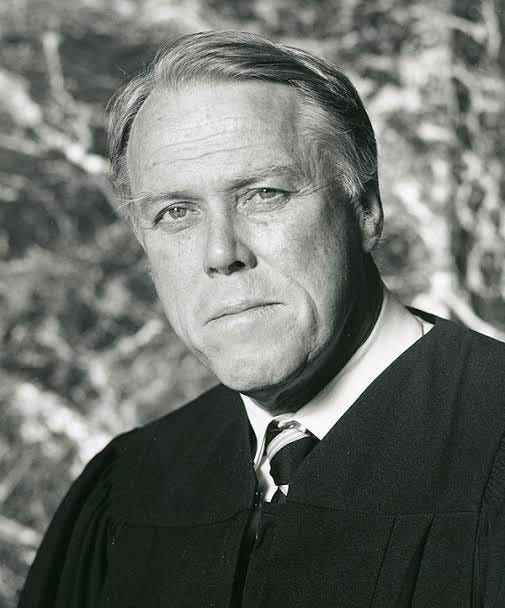
In 1965, Noonan served as a historical and legal consultant to a Vatican commission on contraception and wrote Contraception: A History of Its Treatment by the Catholic Theologians and Canonists (AMAZON LINK).1
In 2005, Noonan published A Church That Can and Cannot Change: The Development of Catholic Moral Teaching (AMAZON LINK), which controversially contended that on some issues the Church has reversed prior teachings. Using concrete examples, Noonan argued that the moral teaching of the Catholic Church on certain issues has not just evolved but has changed and, moreover, continues to change without abandoning its foundational commitment to the Gospel of Jesus Christ.
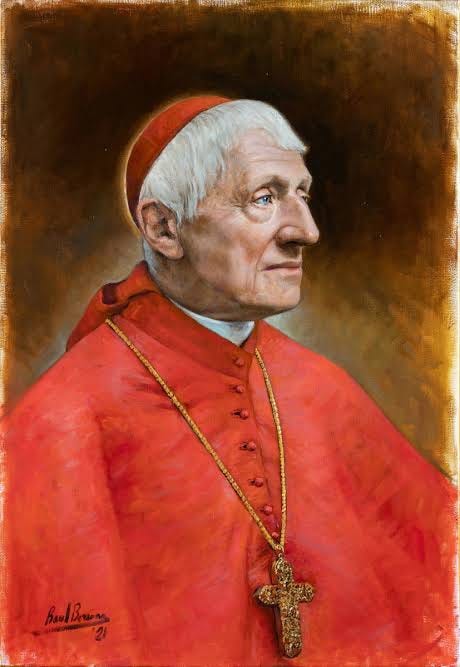
Noonan’s view stands in sharp contrast to orthodox Catholic views, such as those espoused by Saint and Doctor of the Church John Henry Newman. In An Essay on the Development of Christian Doctrine (AMAZON LINK), Newman argued that church teachings (such as those regarding the Trinity, Purgatory, or Marian doctrines) expanded in richness and complexity. Christian doctrine unfolds organically over time through divinely guided human contemplation, much like an acorn growing into an oak tree.
To be sure, Noonan did not claim that every teaching changes or that the Church can simply replace recognized doctrine with something new. But he did claim that there are cases in which what was previously taught or accepted comes to be recognized as wrong. In such cases, the Church has outright reversed its position (albeit often sub silentio) and promulgated new teachings that represent correction rather then just a fuller articulation of an unchanged position.
Noonan ‘s specific cases include slavery, usury, religious freedom, and the Church’s authority to dissolve certain marriages. All of Noonan’s examples have been contested, including by such noted scholars as Avery Cardinal Dulles and Lawrence J. Welch. In an essay that deserves reading, Welch dismantles each of Noonan’s examples. In a First Things article, Cardinal Dulles did likewise, concluding that “Noonan manipulates the evidence to make it seem to favor his own preconceived conclusions. For some reason, he is intent on finding discontinuity but he fails to establish that the Church has reversed her teaching in any of the four areas he examines.”
Importantly for our purposes, Welch’s analysis of one of Noonan’s case studies—usury—concludes:
The example of usury does not give us reason for thinking that certain intrinsically evil acts such as contraception are capable of a similar adaptation.
The Death Penalty Case
In my judgment, the development of Church doctrine on the death penalty likewise does not give us reason to think that Church teaching on contraception willchange.
So, yes, the Church’s teaching on the death penalty has evolved over time, but the not in ways that amount to a reversal or contradiction of its earlier teaching. Instead, what we observe in this case is development based on how circumstances have changed. In 2018, the Church declared the death penalty inadmissible, emphasizing that even people who commit serious crimes have human dignity and that society now has effective ways to protect itself without resorting to execution. The Congregation for the Doctrine of the Faith explained that this position is consistent with the Church’s earlier teachings, rather than a rejection of them.
Contraception is different. The Church maintains that deliberately preventing a marital act from being open to life is intrinsically wrong and it considers this teaching definitive and unchangeable. The reasoning is that contraception separates two things the Church believes should remain connected in marriage: the unitive purpose of sex, which brings spouses together, and its procreative purpose, which leaves open the possibility of life.
So the difference isn’t just that the Church is willing to change its mind on one issue but not the other. From the Church’s perspective, the death penalty involves a judgment about whether a particular punishment is necessary or morally acceptable under certain circumstances. Those circumstances can change, especially as society develops better ways to protect people. Contraception, on the other hand, is understood as an act that is wrong in itself, regardless of the circumstances. That’s why the Church believes its teaching on the death penalty can develop while its teaching on contraception cannot be reversed.
A Personal Take
As a Roman Catholic, I am not obliged to find Church teaching appealing, or be either intellectually or emotionally persuaded by every Church argument for it. But I am required to respond faithfully.
Responding faithfully requires what has been called “religious submission of will and intellect” (Code of Canon Law § 753).
Religious submission does not require me to pretend I have no questions. It requires me to take the teaching seriously as a claim made by an authority I believe Christ entrusted with teaching faith and morals and, accordingly, to be willing to reconsider my own judgment in its light. Put another way, assent involves a choice to be teachable.
On reflection, I have come to think the Church is right about both the death penalty and contracption.
The key is to notice what the two teachings actually said.
The traditional death penalty teaching was a permission, not a command. The Church never taught that the state must execute murderers, only that it may, and always subject to conditions of necessity. The old Catechism text itself was framed conditionally: recourse to the death penalty was not excluded “if this is the only possible way of effectively defending human lives.” John Paul II had already observed in Evangelium Vitae (1995) that, given improvements in penal systems, such cases had become “very rare, if not practically non-existent.” A teaching built on an “if” is one whose application will change when the “if” stops being true. Francis’s revision completed a trajectory that was already well under way. Read that way, Cardinal Ladaria’s explanation looks much less self-contradictory than I thought in 2018.
Humanae Vitae is a different kind of teaching altogether. It contains no “if.” Section 14 excludes “any action which either before, at the moment of, or after sexual intercourse, is specifically intended to prevent procreation,” and insists that it is never lawful, “even for the gravest reasons,” to do evil that good may come of it. John Paul II’s Veritatis Splendor later listed contraceptive practices among intrinsically evil acts. The teaching rests on a claim about the nature of the conjugal act itself, namely the inseparability of its unitive and procreative meanings, rather than on a judgment about which social arrangements are available. Changed circumstances are the whole engine of the development argument, and here there is nothing for them to act on. Better prisons can make executions unnecessary. No comparable development makes the conjugal act something other than what the Church says it is.
The distinction also clarifies Noonan’s examples. Usury is the case usually cited for a loosening in the moral law, but the Church’s condemnation of usury was bound up with the economic nature of money and lending, which genuinely did change. That is the same kind of circumstance-dependent judgment as the death penalty, not a reversal of a teaching about an intrinsically wrong act.
Conclusion
Cardinal Thomas Dolan once said that "the Church does not change God's revelation, but attempts to change us so we can live it."
Indeed.
The version available on Amazon is a 1986 updating of the text that looks at the post-Humanae Vitae debates.